
Nothing About This Was Random
Tracing the warning signs, symbols, and online extremist ecosystems behind a school killing in Russia

Reader’s note: I often struggle with whether terrorist manifestos, images, or symbols should be decoded and analyzed at all. Doing so risks fulfilling exactly what perpetrators seek: attention, interpretation, and post‑hoc meaning‑making around acts of extreme violence. Why spend time parsing the incoherent, deeply contradictory, hate‑filled ideology of a teenager who went on to justify the killing of children?
I raise this question because it shapes the approach of this analysis. My focus is not on amplifying the perpetrator’s worldview, but on identifying recurring signs, symbols, and ideological patterns that can be recognized early—sometimes even before violence occurs—and, ideally, used to prevent future attacks. As this case demonstrates, these patterns are neither random nor isolated.
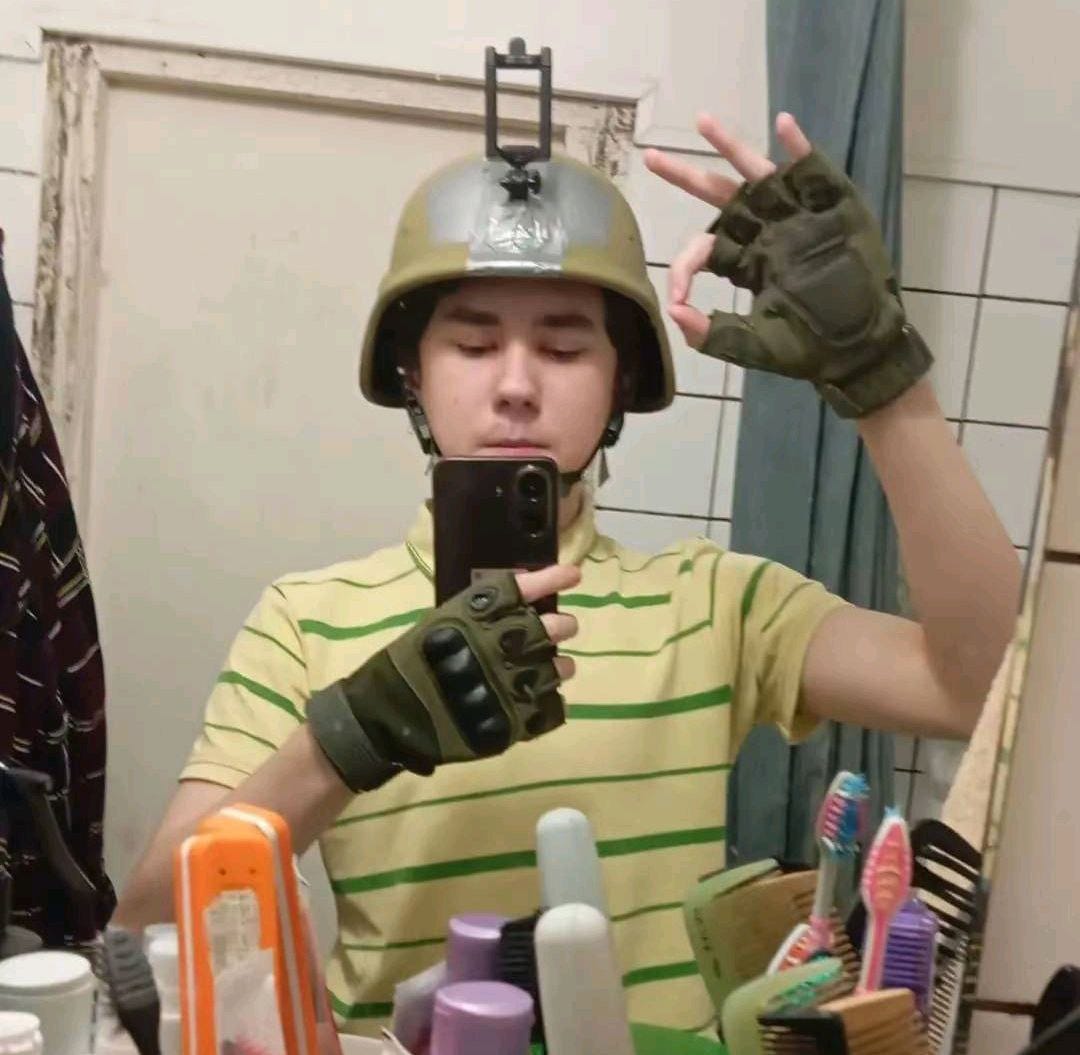
On December 16, 2025, a terror attack took place at a school near Moscow when a 15‑year‑old student, identified in Russian media as Timofey K., armed with a knife and pepper spray, entered Uspenskaya Secondary School. The assailant reportedly targeted children perceived to be of foreign background and fatally stabbed a 10‑year‑old pupil from an immigrant family originating in Tajikistan and injured a security guard, triggering panic as students barricaded themselves in classrooms while authorities moved in to detain him. The attacker was reportedly wearing a “No Lives Matter” T‑shirt and a helmet bearing far‑right slogans, and livestreamed parts of the violence.
It is important to understand that the “No Lives Matter” T‑shirt signifies affiliation with, or at minimum influence from, a global online extremist network. Recentley the group has been designated a terrorist organization in New Zealand, in part due to its links as a sub‑network within the Order of Nine Angles, which has also been proscribed as a terrorist organization. At present, it remains unclear which specific NLM cell Timofey K. may have belonged to or been influenced by. However, in the days following the attack, at least one “No Lives Matter” Russian‑language Telegram channel publicly expressed support for the act, while O9A affilated channels has produce videos and images glorifying Timofey K.
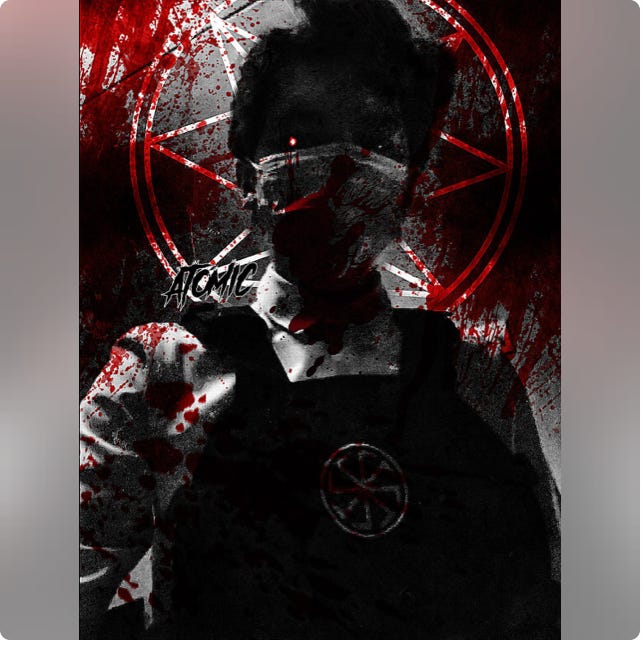
The attacker left behind a substantial volume of material indicating foreknowledge and intent. This included participation in far-right Telegram channels, as well as the creation of multiple custom maps for the game GoreBox, a sandbox game built around high levels of graphic violence and gore. These custom maps explicitly depicted mosques as sites of violence. He also left behind a manifesto and a series of images closely mirroring prior school‑shooter materials, drawing on well‑established visual and ideological tropes common within extremist online subcultures. Disturbingly, several days before the attack, the manifesto was shared in a chat group that included the attacker’s classmates. One recipient reportedly responded with a brief rebuke—“are you an idiot?”—without notifying school officials or authorities.
Among the materials left by Timofey K. were images of the perpetrator making the “OK” hand gesture, a symbol repeatedly reappropriated within white supremacist circles and used by WS terrorists before or after attacks. Similar imagery has appeared in past cases, including Brenton Tarrant’s court appearance in 2019, and more recently in materials linked to Natalie Rupnow, Solomon Henderson, and Muhammad Nazriel Fadhel Hidayat, reflecting a broader pattern of imitation and symbolic signaling across attacks.
Notably, the manifesto explicitly includes images of Henderson and Fadhel Hidayat, presenting them as examples of individuals who, in the attacker’s framing, had “taken action” on behalf of the so‑called “white race.” The 10‑page manifesto further quotes and references well‑known perpetrators of mass‑casualty violence, including Eric Harris, one of the Columbine High School shooters; Dylann Roof, who carried out the Charleston church massacre; and Brenton Tarrant, responsible for the Christchurch attacks.
More alarmingly, at least half of the manifesto is devoted to instructional content related to the construction of weapons and explosive devices using everyday materials. In this respect, the document departs from many prior attack manifestos: it does not merely seek to justify violence ideologically or persuade others to adopt similar views, but actively functions as an instructional manual, lowering the barrier to replication and posing a risk that extends well beyond the original attack.
A final note: I write this blog on a volunteer basis, driven by genuine concern and a commitment to raising public awareness. If my work has been helpful or informative, please consider supporting it through a paid subscription or a donation via Stripe or PayPal.